
Hard Groove Techno: The Ultimate Production Guide (Workflow & Sound Design 2026)
Hard Groove Techno isn’t just fast music. It’s all about micro-rhythm and texture. Unlike Raw or Peak Time styles, where the Kick and Rumble dominate monolithically, Hard Groove Techno shifts the focus to the low-mids and percussions that create a sense of perpetual motion.
If you want your tracks to avoid sounding flat or like static loops, you must master the art of Resampling and Transient Shaping. Here is how to build a Hard Groove Techno track that stands out from the competition.
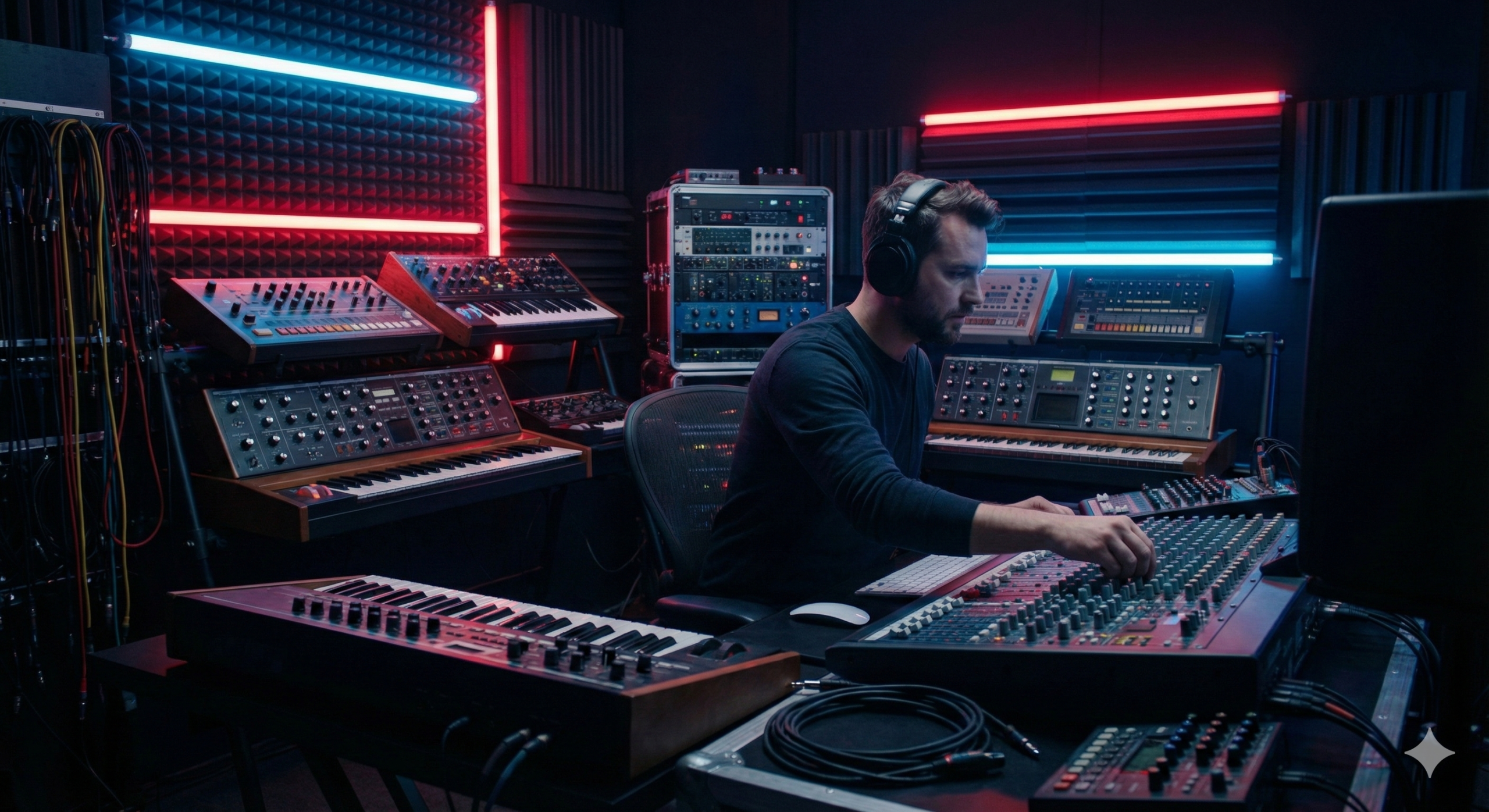
Hard Groove Techno Rhythms: Beyond the TR-909
Forget the static 4/4 grid. The secret of a top-tier Hard Groove Techno track lies in the placement of percussive elements (congas, bongos, toms) and how they lock in with the kick.
- Percussive Layering: Don’t use Splice loops as they are. Chop them, change the pitch, and most importantly, play with Time Shift. Nudge your hi-hats or tribal loops a few milliseconds (5-15ms) backward or forward relative to the grid to create that “human” and urgent feel essential for Hard Groove Techno.
- Subtractive EQ: Every percussive loop needs its own space. Cut aggressively below 200Hz on everything that isn’t the Kick or Bass. Use a Dynamic EQ to tame resonances in the mid-frequencies (500Hz-2kHz) that build up when layering multiple loops.
- Transient Shaping: Crucial. Use a transient shaper to shorten the sustain of percussive loops. You want dry, fast hits, not long tails that muddy the mix.
Rolling Bassline: The “Call and Response” Technique
In Hard Groove Techno, the bass isn’t just a reverberated “Rumble”. It is often a sequence of rhythmic 16th notes that dialogue with the kick.
- Create a bass pattern that fills the empty spaces of the kick.
- Apply tube saturation (e.g., FabFilter Saturn or Soundtoys Decapitator) to add harmonics that cut through even on small speakers.
- Advanced Sidechain: Don’t use a simple compressor. Use tools like LFO Tool or ShaperBox to sculpt the bass volume with millimeter precision, ensuring there are no phase conflicts with the kick transient.
If you notice your low-end lacks definition or power, it might be a monitoring or mastering chain issue. Consider relying on our Professional Mixing & Mastering Services to ensure your Hard Groove Techno track hits hard on every sound system.
Resampling and Glitch: Creating Unique Textures
This is the trick that will make your Hard Groove Techno production feel “exclusive” and professional. Create a bus with various percussive loops, glitch effects, short reverbs, and delays. Record the output of this bus into a new audio track for 4-8 bars while manipulating effect parameters in real-time.
Take the recorded audio, chop it, reverse some parts, and rearrange it. This process creates timbral variations impossible to achieve via MIDI alone.
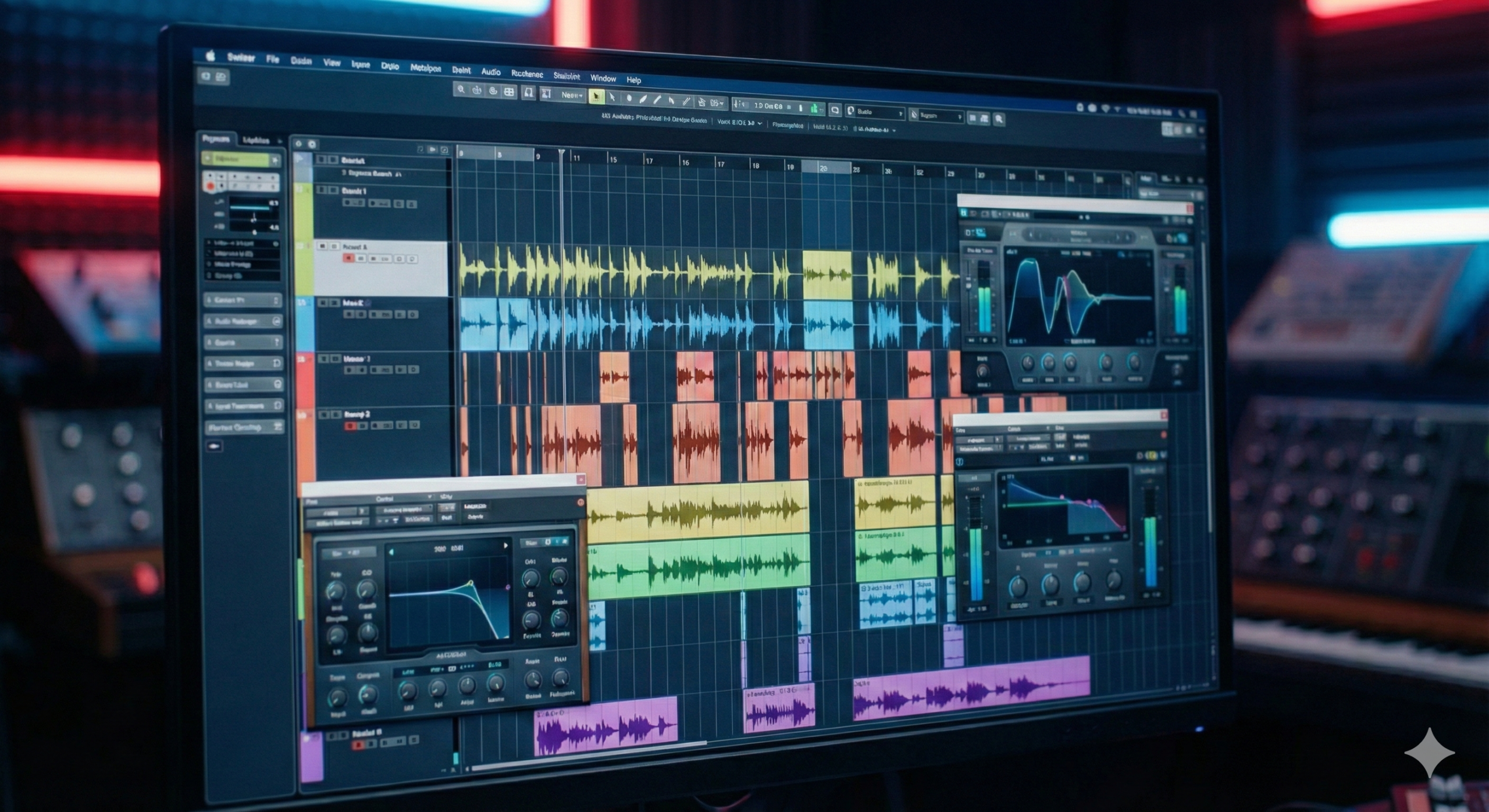
Arrangement and Workflow in Hard Groove Techno
The arrangement in Hard Groove Techno must be hypnotic but never boring. Use long automations (filters, reverb dry/wet) to create tension over 16 or 32 bars.
We know this level of detail requires hours of study. If your DJ career is taking off and studio time is scarce, you can maintain a high release output by visiting our Premium Ghost Productions shop. You will find release-ready Hard Groove Techno tracks that meet these quality standards.
FAQ: Hard Groove Production
What is the ideal BPM for Hard Groove Techno?
The sweet spot for modern Hard Groove Techno usually sits between 138 and 145 BPM. This tempo range is critical: it’s fast enough to drive the dancefloor energy but slow enough to allow the tribal percussions and rolling basslines to “breathe” without sounding cluttered or chaotic.
How do I add movement to static percussive loops?
Static loops kill the vibe. To fix this, use modulation plugins like ShaperBox or automate parameters like “Grain Delay” to create constant evolution. Crucially, apply Swing or use the Groove Pool in your DAW (like Ableton) to nudge hits slightly off the rigid grid, giving them a human, funky feel.
What is the difference between Hard Groove and Hard Techno?
It is a common confusion, but the vibe is distinct. While Hard Techno often relies on extreme distortion, aggressive industrial textures, and monolith kicks (Schranz style), Hard Groove Techno focuses on rhythm, funk, and “rolling” percussions. It sounds cleaner, more dynamic, and is specifically designed for complex 3 or 4-deck mixing.